
In order to understand tax stamps and the process for ensuring secure and safe tax stamp application, there are a few components you must first understand. In this blog we’ll cover what a tax stamp is and what makes it different from other consumer stamps. We’ll also share common industries who may use tax stamps and identify automation equipment that could increase your packaging efficiencies.
Integrated Systems
3 Techniques for Successful Automatic Label Application
If you’re looking to learn more about proven labeling techniques for automatic labeling and what’s needed for your label applicators, this blog is a great place to start. While there are many techniques in the industry, wipe-on labeling, tamp label applicators, and blow-on labels are three techniques we recommend for successful automatic labeling. Let’s dive into each technique with a bit more detail.
1. Wipe-on Label Applicator
Sometimes referred to as “merge” labeling; wipe-on labeling is where a label is dispensed in the same direction of flow as a product when a label is being applied. This is an automatic labeling technique that is widely used in the industry but requires precise set-up for optimal production speeds and quality output. It is also used for products with irregular shapes and surfaces that are not flat (source).
Wipe-on label applicators typically require the base product to be moving and consistently presented to the labeler. While the product moves towards the labeler, a free rotating roller or brush is used to aid the transfer of the label onto the moving product. From there an encoder can be used to track the speed of the product the label will be applied to so the labeler can apply accurately if the product speed might vary.
For this technique to be successful, your automatic labeler should have either a single axis or multiple axis motor. A single motor will assist with unwind, rewind, and drive; however, it will likely require clutching mechanisms for the unwind and rewind functionality. Whereas a multiple axis motor separately powers the unwind, rewind, and drive.
High-Speed Applications
For wipe-on labeling applications requiring higher speeds, a vacuum box or powered unwind may be implemented. (See the third technique to learn more about vacuum/blow boxes and blow-on labeling.) To meet these high-speed and tight accuracy requirements, a second stage may be added to the labeler such as:
Vacuum belt with motor drive: this option allows the label to be dispensed with the adhesive open (non-adhesive side facing the vacuum belt). The vacuum belt can then adjust position or speed to accurately apply the label such as using Multifeeder’s Accutipping controls.
Driven rotary vacuum wheel: this can transfer the label from the labeler to the product in a second stage for added speed or accuracy, similarly using servo controls such as Multifeeder’s Accutipping controls.
2. Tamp Label Applicator
A tamp applicator is a contactless technique for applying smaller labels on products. It is most commonly used on print and apply labelers; however, this technique can also be used on wipe-on label applicators for 3D products or hard-to-reach label placements (i.e. recessed areas). MFT 150pa Print and Apply Automatic Label Applicator
Tamp labelers place the label onto an air cylinder tamp pad or vacuum tamp pad before placing the label onto the product. As the product moves down the conveyor, a pressure sensor (such as Multifeeder design) can be used to indicate if the tamp pad comes into contact with the product. This is especially valuable for variable height products or more intricate products. Such products may also benefit from a complex tamp pad that can place a corner label on more than one surface.
To support a complex tamp pad, a second air cylinder or a hinge (spring-loaded or gas shock) may be required for the second side. A pneumatic style smart tamp or heavy-duty smart tamp could also be used to prevent any tweaking or sensitivity to dirt; learn more about the smart tamp we use in the MFT 150pa Print and Apply Automatic Label Applicator. Additionally, a tamp pad may feature vacuum to hold the label while an airblast is used to release the label onto the product.
3. Blow-on Label Applicator
This sophisticated technique is sometimes used to replace the industry-favorite wipe-on labeling; although it is slightly less precise. Blow-on label applicators use a controlled blast of compressed air to place labels at high application rates. (source 1, source 2). This technique is commonly used for blow labels on coupons and other high-speed applications that require a contactless application (i.e. glass or other fragile products).
A blow box or vacuum box can be used in a similar way when paired with a wipe-on labeler. Oftentimes the vacuum/blow box uses a muffin fan to create a vacuum effect by holding the label to the bottom surface of the transfer device. The wipe-on labeler will index the label onto the bottom surface of the vacuum/blow box, which is then held in place by vacuum. When a product traveling below the box gets to the location the label is to be applied, an air blast releases the label onto the product below. This feature allows the labeler to be placed either in-line or perpendicular to the base product flow depending on label orientation requirements.
Defining which automatic labeling technique is best for your product or application can depend on a series of variables. If you’re interested in learning more about these techniques and other labeling solutions for your product, we’re happy to help. Get in touch with one of our automation and labeling experts by contacting us here or check out some of our labelers here.
Send samples of your labels and base product to us for a complimentary evaluation and test video. Click the button below to get started.
Tags: Labelers, Integrated Systems
How To Expedite Your PPE & Medical Packaging

The coronavirus (COVID-19) has changed our way of life in 2020 — both personally and professionally. Employees are adapting to work from home policies. People are adding facemasks to their wardrobe. Companies are changing the way they do business. There’s a lot that’s changed.
For companies who manufacture and package medical supplies — we applaud you. These last six months have pushed you to adapt and accelerate production, helping millions of Americans stay safe. But the pandemic isn’t over yet. Hospitals across the U.S. are still struggling to keep people on the front lines safe. And, the need for PPE and COVID-19 medical supplies still remains a necessity.
Together, manufacturers and equipment providers can create more of these products. One of the first steps to doing this is to automate the packaging of PPE and medical products.
Boxes and Cartons for Automated PPE Packaging
- Facemasks
- Hand sanitizer
- Gloves
- Eye Protection/Gloves
COVID-19 Products for Automated Medical Packaging & PPE
- Test Strips (Automate packaging & batch counts)
- Test Kit Boxes and Cartons (Automate serialization & place UDIs)
- Disposable Thermometers (Automate packaging & batch counts)
- Manuals & Instructions
How to expedite PPE & Medical Packaging Output
1. Use accurate serialization and UDI placement
“Serialization” and “unique device identification” aren’t foreign words to medical and pharmaceutical companies. These tools help safeguard products and track them throughout the entire supply chain. This is especially important for high demand products — like COVID PPE and medical supplies — that move fast. Automation equipment that supports serialization and UDI placement can help output acceleration. In turn, it could help provide medical facilities with more of the products they need during the pandemic.2. Automate your batch counting and banding
During the pandemic, production line employees are (hopefully) following social distancing recommendations. Meaning, manual counting and preparation of products can take longer. This can cause some serious pains when your main goal is acceleration of product output. Automated equipment that batch counts and bands your products is a great solution. It offers limited human interaction and could offer some serious ROI right now.3. Implement verification technologies into production
This step works hand-in-hand with step #1. Verification can be combined with serialization/UDI placement devices to create an airtight process for product traceability. Together they ensure the right product is being assigned the right code at the right time. Specific verification technologies that will help you accelerate your production include:- Vision systems
- Barcode readers
- Rejection systems
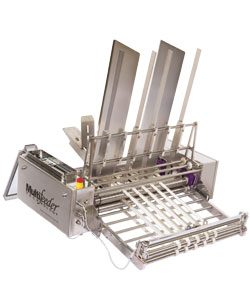
4. Invest in extra labeling machines and friction feeders
For obvious reasons, you’re likely experiencing high product demand. Hiring more employees, buying equipment, or upgrading existing equipment can help. But, we recommend focusing on options two and three. Not sure if you need new equipment or can upgrade what you have? Talk with your automation equipment manufacturer or contact our team here. A great place to start when evaluating equipment options is to start with what you have. Next, check your equipment’s cleaning and sanitizing options. With the pandemic still in full swing, there are regulations set by the CDC and FDA that must be upheld. To help meet these, we recommend looking into CIP automation equipment — also known as hygienic equipment. Below are a couple of hygienic options that could keep your company, products, and team safer.Our PPE & Medical Packaging Equipment
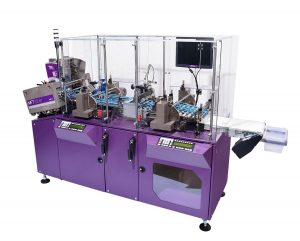
Track & Trace System for PPE & Medical Packaging
This system offers turnkey product handling for serialization coding, printing, inspection, and rejection. It also provides a trackable data file. Learn more about the Track & Trace system here or request a quote below.
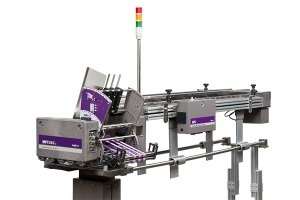
Automatic Product Loader for PPE & Medical Packaging
This machine multiples the product capacity of our MFT friction feeder systems by maximizing runtime and minimizing operators. Learn more about the Automatic Product Loader here or request a quote below.
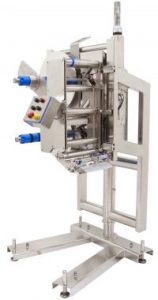
Hygienic Labeler for PPE & Medical Packaging
The Hygienic Labeler 300 meets IP69K requirements and meets and exceeds IP66/NEMA4X standards. Its Clean-in-Place design also provides minimal contamination points. Learn more about the Hygienic Labeler here or request a quote below.