Join Us at Virtual Engineering Week

Multifeeder Technology is thrilled to announce our attendance and virtual booth at Virtual Engineering Week. The five day conference is FREE to everyone and is a great opportunity for those in the engineering, manufacturing, and design fields.

DETAILS & PERKSVirtual Engineering Week Event

  • November 30th – December 4th, 2020
  • FREE Admission
  • 100+ exhibitors
  • Medtech Morning Series
  • Online chat & 1:1 video meetings
  • Live panels + Q&As
  • Networking opportunities & virtual happy hours

WHAT TO EXPECT

  1. Virtual Booths – Much like a trade show booth, you’ll see exhibitors brand a webpage that features their products, team, and more. A quick tip: you’ll have to be registered before you can view these. But here’s an example of a virtual booth, you might even recognize the company being featured.
  2. Networking, lots of networking – whether you join one of the daily virtual happy hours or rely on the platform’s algorithm-driven “matchmaking” tool, you’ll be sure to connect with new people who share common interests and passions.
  3. Virtual Learning – you can’t get away from these two words in 2020, and for good reason. At Virtual Engineering Week you’ll hear from industry leading speakers at Boston Scientific, Johnson & Johnson, Philips, Kablooe Design, and Siemens.
  4. FREE TICKETS – yes, you read that right. This virtual event is free and you can register by clicking here: Tickets no longer available.
  5. Virtual Meetings – our team (and many others) will be standing by to answer any questions via live chat or through a meeting that works best for you. If you’re interested in connecting with one of our automation solution experts on hygienic products, be sure to sign-up for a 1:1 meeting. You can do this by clicking a time under “book a meeting” on our virtual booth page.
We hope to see you at Virtual Engineering Week! If you’re already attending be sure to stop by our virtual booth and say hello. To stay up to date on the latest details and updates throughout the week, follow the #VirtualEngineeringWeek hashtag and the MFT team on LinkedIn.

About Multifeeder Technology

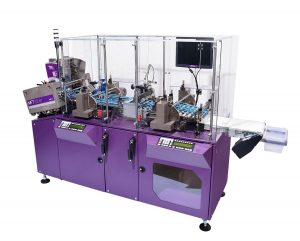
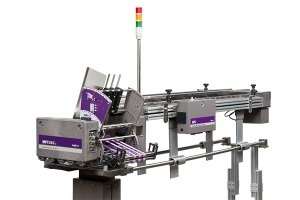
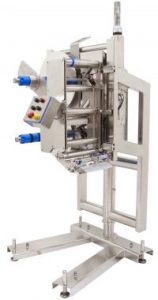
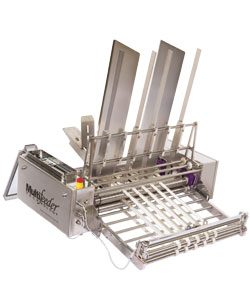
We are a worldwide leader in Automation Solutions for the Food, Pharmaceutical, Labeling, Print, and Packaging industries. We provide high performance friction feeding, labeling, and integrated system solutions. Multifeeder offers Hygienic Washdown and Washdown products. Our Hygienic Washdown Friction Feeders 300 and 600, and the Hygienic Washdown Labeler 300 are built to meet the most rigorous environmental demands for the Food, Pharmaceutical, Cannabis, Labeling, Print and Packaging industries. With state-of-the-art control technology and robust mechanics, our products feed more quickly and accurately to provide customers with a greater value of return. All feeders, labelers and accessories can easily be integrated with other machines to provide a total system solution for any application.

5 Types of Equipment That Will Improve Your Automation Process

The success of your production line dependent on the technology and equipment you invest in to support it. And with the right automation process and equipment, your company could see increased production efficiency and substantial return on investment.  This probably isn’t new information to you. Surely, if you invest in packaging automation, your packaging process and production rates should increase. But the question here isn’t why should you invest in automation equipment, it’s what equipment is worth the investment? To learn more about the top five pieces of automation equipment that support increased product output, keep reading. 

1. Friction Feeders

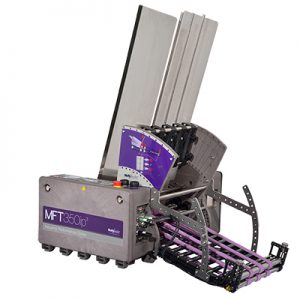
Friction Feeders are our bread and butter when it comes to automation solutions. These machines consistently feed products with speed and accuracy down your production line. When paired with other automation equipment, we’ve seen friction feeders increase product per minute output tenfold. That’s an automation process production rate you can’t beat. A friction feeder should be a core component of your production line if you’re aiming to increase output and production rates.   AUTOMATIC DROP TABLE (ADT)

2. Automatic Drop Table

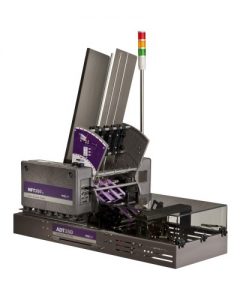
The Automation Drop Table or drop feeder batch, accumulate, square, and drop accurate counts of a variety of products. This user-friendly accessory integrates with MFT Friction Feeders like the MFT IP 250 XED, MFT IP 350 XED and MFT IP 550 XED. Its sophisticated algorithms ensure consistent and precise operation, even in the most demanding applications. Companies in the pharmaceutical industry, contract packaging, or print industry have found this accessory essential to their increased product output. 

HIGH SPEED COLLATOR (HSC)


3. High Speed Collator

If you’re looking for a packaging efficiency solution, the High Speed Collator (HSC) is an accessory you’ll want to incorporate into your automation process. When paired with MFT friction feeders or labelers and an Automatic Drop Table, the HSC quickly becomes a powerful automated packaging system. The seamless design of this lug conveyor allows it to integrate with barcode scanners, wrappers, cartoners, vision systems, and more!   

4. Labelers Machine

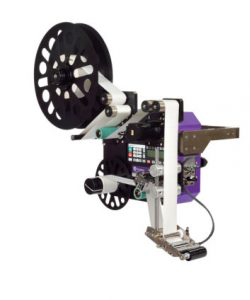
Another efficient piece of equipment that adds value and speed to your production line is a labeler machine. Some labeler machines, such as the Impresso Labeler, fit into small production areas and yet still require the same durability and life expectancy as other labelers on the market. Today’s production environment demands speed and accuracy unlike we’ve ever experienced. But, investing in a labeler machine for your automation process can be the solution you’ve been looking for to help meet those demands.  

SHINGLING CONVEYOR (SC)

5. Shingling Conveyor

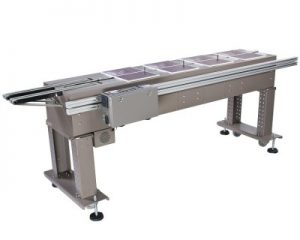
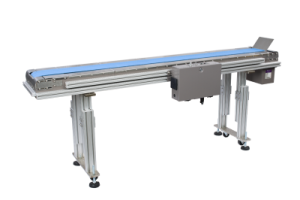
When looking for packaging efficiency solutions, the shingling conveyor is an accessory that can help with your production line flow. This piece of automation equipment adds extra production capacity and allows for increased up-times, improving production line efficiency. The shingling conveyor is often integrated with MFT Friction Feeders, High Speed Collators, and Vacuum Track Conveyors to increase product output.    The best place to start before evaluating your automation equipment is to start with your automation process. First, identify the problems and challenges your process faces that would improve product output and ROI if addressed. Next, find a piece of equipment or an accessory that can reduce the impact of your problems and/or eliminate them completely.  As you continue to improve your automation process with new equipment, we hope you keep our team in mind. They’re standing by to help you get started on your evaluation and unleash the packaging and processing potential your production line holds. 

5 Things You Need For Successful Cannabis Labeling in 2021

The cannabis industry is a multi-billion dollar industry that has no intention of slowing down. It’s estimated that by 2022, the legal-marijuana industry could impact the economy by $77 billion (source). If you’re in the business of cannabis production, you’ll inherently need to think about the role packaging plays in your process. With packaging comes the need for cannabis labeling and safety protocols. This blog shares a few of the steps, products, and equipment worth trying for cannabis labeling. Above all, we hope one of these steps helps you to have a blooming business in 2021. 

1. Identify a Concentrate Container

Cannabis ConcentrateFirst, you’ll need something to contain your cannabis. For concentrated versions of the plant, cartridges and containers are common options. Versions of these concentrate packaging may include glass concentrate containers, vape cartridges, oil cartridges, AVD cartridges, and Ccell cartridges. However, there are many options for this step. 

2. Choose a Packaging Method

Secondly, you’ll want a way to transport and seal the container. To do this, you’ll need to figure out a plan for your packaging. A few commonly used products for packaging include flattened cartons, product free pouches (like a mylar bag), and round containers (similar to a pill bottle), or cartridge blister packaging.

3. Invest in Tamper Evident Labels or Stickers

Thirdly, you’ll want to seal your concentrate containers and packaging properly. You can do this by applying a tamper evidence dispensary label or a paper sticker label to the product and/or package. These small labels help protect the integrity of your product. By utilizing tamper evident labels or stickers, you’ll ensure your customers, product, and company are safe from anything harmful.

4. Select a Packaging Labeler

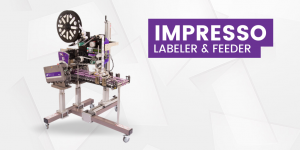
Impresso Labeler and Feeder System Finding a label machine that can properly place your dispensary labels is key to producing more products, selling more products, and keeping your brand standards in place. When searching for a cannabis label applicator it’s important to know if you can feed your packaging through the labeler with ease and precision. Doing a FAT or Factory Acceptance Test will help you confirm this and ensure the performance is up to par. This also ensures you’re investing in a packaging labeler that actually works for your product.  Oftentimes the label applicator will place the tamper evident labels or stickers on the product for you automatically — saving you time and money. When pairing the labeler with a feeder system, you’ll ensure your cannabis production is fully automated and secure. There are even hygienic labelers and hygienic feeders if you’re looking to keep your space clean and sterile. 

5. Know your State’s Cannabis Labeling Laws

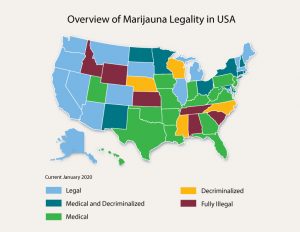
Finally, if you haven’t already educated yourself on the labeling laws in your state now is the time. Below are a few labeling laws for states that have legalized cannabis — more cannabis state laws can be found here (Note: Always refer to your state’s government website for updated cannabis laws). Cannabis Industry Legality in the US
    1. Alaska Cannabis Labeling Laws
    2. California Cannabis Labeling Laws
    3. Colorado Cannabis Labeling Laws
    4. Illinois Cannabis Labeling Laws
    5. Michigan Cannabis Labeling Laws
    6. Maine Cannabis Labeling Laws
    7. Massachusetts Cannabis Labeling Laws
    8. Nevada Cannabis Labeling Laws
    9. Oregon Cannabis Labeling Laws 
    10. Vermont Cannabis Labeling Laws
    11. Washington Cannabis Labeling Laws
In conclusion, as the cannabis industry continues to flourish, so will the equipment and packaging options. If you’re wanting to increase output, improve your packaging standards, or update your cannabis production line — we have a solution that can help. Check out some of our labelers, friction feeders, and integrated systems or get in touch with us below and someone from our team will be in touch. DISCLAIMER: The contents of the Multifeeder Technology website regulatory pages are for general information only. The information herein should not be relied upon for legal advice on state marijuana laws. We provide links to state cannabis regulatory sites; we do not vouch for or assume any responsibility for the content, accuracy or completeness of material presented in linked sites. The information presented on these pages may not reflect the most current legal developments in the marijuana industry. We disclaim all liability in respect to actions taken or not taken based on any or all of the contents of this site to the fullest extent permitted by law.

Join Us at PACK EXPO Connects

Recently, PACK EXPO announced they will cancel their traditional trade show format for a brand new digital experience. This digital conference is called Pack Expo Connects 2020 and occurs from November 9-13, 2020. Multifeeder Technology will feature two automation systems at the event: the Hygienic Washdown System and the Booklet to Web Tipping System. These two systems will have a series of live demos scheduled throughout the event that attendees can watch and ask questions via a live chat. The times for these live demos are below:
    1. Hygienic Washdown System (Labeler & Friction Feeder) —  Designed for food-grade applications and optimal cleaning.
      1. Mon, November 9 – 10:00 AM – 10:15 AM (CST)
      2. Tue, November 10 – 10:00 AM – 10:15 AM (CST)PACK EXPO Connects 2020 Logo
      3. Wed, November 11 – 10:00 AM – 10:15 AM (CST)
      4. Thu, November 12 – 10:00 AM – 10:15 AM (CST)
    2. Booklet to Web Tipping System Effortlessly apply tip-on product to a web at production speeds.
      1. Mon, November 9 – 11:00 AM – 11:15 AM (CST)
      2. Tue, November 10 – 11:00 AM – 11:15 AM (CST)
      3. Wed, November 11 – 11:00 AM – 11:15 AM (CST)
      4. Thu, November 12 – 11:00 AM – 11:15 AM (CST)

Learn More about the Hygienic Washdown System

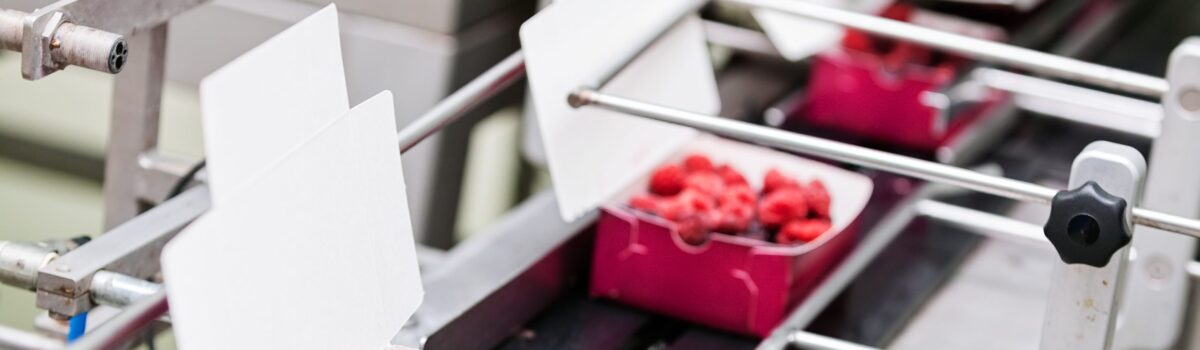
This system is designed with two machines: the hygienic labeler and the hygienic friction feeder (in a 300 or 600 size). The MFT Hygienic Feeder and Labeler system was designed for food packaging, clean room, and medical device applications. It features a clean-in-place design that meets IP69K and NEMA4X standards. In the video below, we feature the MFT Hygienic Feeder & Labeler System placing and labeling corrugated pizza circles with accuracy and speed.

Learn More about the Booklet to Web Tipping System

This system features a lugged driven discharge with lead edge registration to help it repeatedly place products in the same spot. In the video below we pair our Booklet to Web System with a 103hsm+ Label Applicator to run extended content labels.  

Connect with us at PACK EXPO Connects

There’s a few ways you can get in touch with us at PACK EXPO Connects.
  1. Attend one of our demos!
  2. Add the Multifeeder Virtual Showroom to your show planner
  3. Add one of our products to your show planner
  4. Start a live chat with someone from our team
  5. Request a private meeting with someone from our team to discuss your application or project
The following team members will be available to chat live with you during the demo sessions. Some may also be available for one on one meetings!

How to Automate UDI barcodes for Pharmaceutical Packaging

Automation has the ability to quickly introduce and expand life-saving products into society. However, some companies are faced with strict regulations while producing these products safely, efficiently, and accurately. One way pharmaceutical packaging companies combat this feat is by utilizing automation to apply UDI barcodes or Unique Device Identification codes on products. udi labeling & pharmaceutical packaging What are the UDI labeling requirements? The UDI labeling requirements align with the Unique Device Identification System, which was signed into law in 2007. The system ensures unique identifier or codes are assigned to medical devices manufactured across the globe (source). Pharmaceutical labeling requirements mandated by the FDA, state the following: “The Unique Device Identification System final rule (UDI Rule) requires device labelers (typically, the manufacturer) to:
    • Include a unique device identifier (UDI) on device labels and packages, except where the rule provides for an exception or alternative.
      • If a device is intended for more than one use and intended to be reprocessed before each use, the device labeler must also mark the UDI directly on the device.
    • Submit device information to the Global Unique Device Identification Database (GUDID).”
Successful companies automate their pharmaceutical labeling process with product feeding, labeling, and verification systems equipped for UDI barcodes. These types of automation equipment can also typically feed products like Tyvek lids, die cut cartons, foil pouches, clear bags, and more.

How to Automate UDI Pharmaceutical Labeling

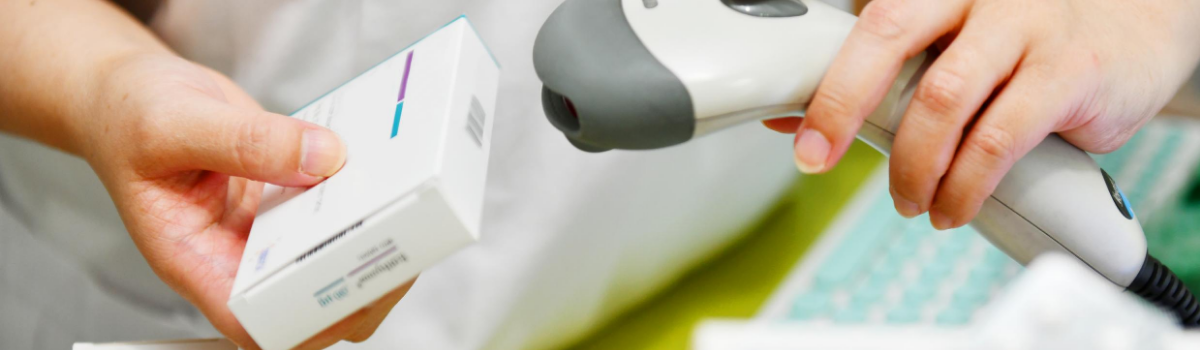
When applying a UDI code, it is possible to apply a label or to print the code directly onto the products. The products are loaded into a MFT Automation Friction Feeder that will gently feed the product one at a time, and transfer them one at a time onto the discharge of the feeder.  The UDI codes are then applied onto the products automatically as they travel on the discharge of the feeder. After the UDI code has been applied to the product, a vision camera system is utilized to confirm the identification has been properly placed on the product. This process is also known as serialization.

What is serialization?

Serialization is the process of applying a unique code to each individual product. It provides a system to track and trace a pharmaceutical product from its original source through the entire supply chain. Using serialization technologies for pharmaceutical packaging is a great way to safeguard products. Automated quality management systems (QMS) can also help you save time and money on packaging production. These types of automated technologies help companies remain competitive — especially in highly regulated industries like the pharma industry. MFT Automation manufactures friction feeding, printing, and labeling machines for Fortune 500 pharmaceutical companies. These machines can print, apply, and label UDI codes onto products automatically. They can also integrate with Ink Jet and Thermal transfer print systems, to keep pharmaceutical packaging lines performing at optimal speeds. If you have a unique carton or product that needs feeding or labeling within the pharmaceutical packaging industry, our customized solutions can help. Get in touch with us below and start saving time, money, and labor with automated Unique Device Identification and pharmaceutical labeling.

How To Expedite Your PPE & Medical Packaging

The coronavirus (COVID-19) has changed our way of life in 2020 — both personally and professionally. Employees are adapting to work from home policies. People are adding facemasks to their wardrobe. Companies are changing the way they do business. There’s a lot that’s changed. For companies who manufacture and package medical supplies — we applaud you. These last six months have pushed you to adapt and accelerate production, helping millions of Americans stay safe.  But the pandemic isn’t over yet. Hospitals across the U.S. are still struggling to keep people on the front lines safe. And, the need for PPE and COVID-19 medical supplies still remains a necessity. Together, manufacturers and equipment providers can create more of these products. One of the first steps to doing this is to automate the packaging of PPE and medical products.

Boxes and Cartons for Automated PPE Packaging

  • Facemasks
  • Hand sanitizer
  • Gloves
  • Eye Protection/Gloves

COVID-19 Products for Automated Medical Packaging & PPE

  • Test Strips (Automate packaging & batch counts)
  • Test Kit Boxes and Cartons (Automate serialization & place UDIs)
  • Disposable Thermometers (Automate packaging & batch counts)
  • Manuals & Instructions
This blog is for those who already manufacture COVID-19 supplies, and those who want to start. If this sounds like something you’re interested, we’ve identified a few ways to help you jump in head first. If you’re already producing COVID PPE or supplies but need increased output, these apply to you as well.

How to expedite PPE & Medical Packaging Output

1. Use accurate serialization and UDI placement

“Serialization” and “unique device identification” aren’t foreign words to medical and pharmaceutical companies. These tools help safeguard products and track them throughout the entire supply chain. This is especially important for high demand products — like COVID PPE and medical supplies — that move fast. Automation equipment that supports serialization and UDI placement can help output acceleration. In turn, it could help provide medical facilities with more of the products they need during the pandemic.

2. Automate your batch counting and banding

During the pandemic, production line employees are (hopefully) following social distancing recommendations. Meaning, manual counting and preparation of products can take longer. This can cause some serious pains when your main goal is acceleration of product output.  Automated equipment that batch counts and bands your products is a great solution. It offers limited human interaction and could offer some serious ROI right now.

3. Implement verification technologies into production

This step works hand-in-hand with step #1. Verification can be combined with serialization/UDI placement devices to create an airtight process for product traceability. Together they ensure the right product is being assigned the right code at the right time. Specific verification technologies that will help you accelerate your production include:
  • Vision systems
  • Barcode readers
  • Rejection systems
Watch the video below to see some of these in action!

4. Invest in extra labeling machines and friction feeders

For obvious reasons, you’re likely experiencing high product demand. Hiring more employees, buying equipment, or upgrading existing equipment can help. But, we recommend focusing on options two and three. Not sure if you need new equipment or can upgrade what you have? Talk with your automation equipment manufacturer or contact our team here. A great place to start when evaluating equipment options is to start with what you have. Next, check your equipment’s cleaning and sanitizing options. With the pandemic still in full swing, there are regulations set by the CDC and FDA that must be upheld. To help meet these, we recommend looking into CIP automation equipment — also known as hygienic equipment. Below are a couple of hygienic options that could keep your company, products, and team safer.

Our PPE & Medical Packaging Equipment

Track and Trace System

Track & Trace System for PPE & Medical Packaging

This system offers turnkey product handling for serialization coding, printing, inspection, and rejection. It also provides a trackable data file. Learn more about the Track & Trace system here or request a quote below.Automatic Product Loader

Automatic Product Loader for PPE & Medical Packaging

This machine multiples the product capacity of our MFT friction feeder systems by maximizing runtime and minimizing operators. Learn more about the Automatic Product Loader here or request a quote below.Food Labeling Machine

Hygienic Labeler for PPE & Medical Packaging

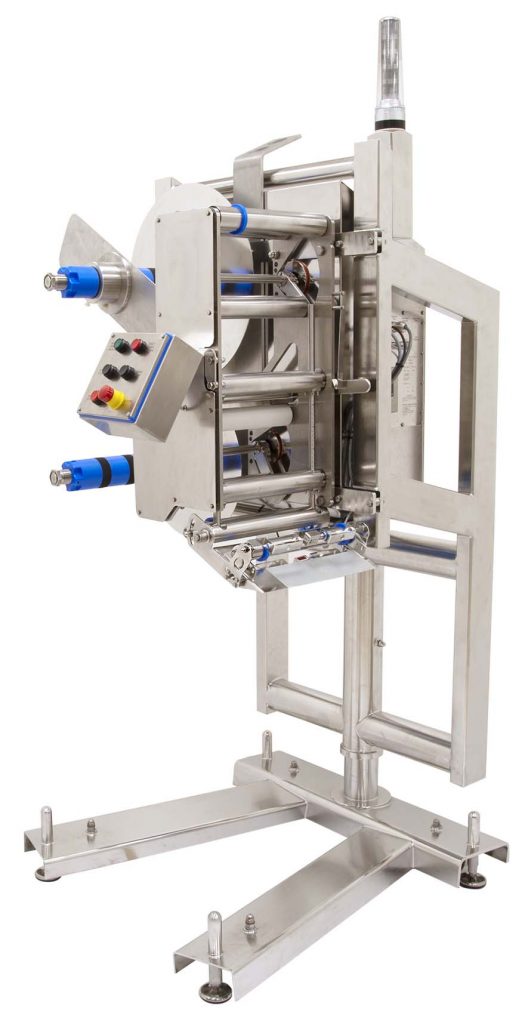
The Hygienic Labeler 300 meets IP69K requirements and meets and exceeds IP66/NEMA4X standards. Its Clean-in-Place design also provides minimal contamination points. Learn more about the Hygienic Labeler here or request a quote below.Hygienic Washdown Feeder 600

Hygienic Friction Feeder for PPE & Medical Packaging

This feeder is available in the 300 and 600. Both meet sanitary requirements and comply with IP66 or higher standards and NEMA4X standards.

How to Choose a Labeling Machine for Food Packaging

Did you know the Global Foods Packaging industry could reach $400 billion by the year 2025? While this industry continues to grow, so does the need for companies to automate their manufacturing processes. This is where automation equipment can be a resource; such as labeling machines and label applicators. If you work in engineering or operations, you may be looking to improve your process. If you’re a business owner or purchasing manager, you need a labeler that will justify the investment. No matter what seat you’re in, there are a few steps to take before choosing a labeler machine.

Step 1: Define Production Challenges & Goals  

Before you begin researching automatic label machines, take time to define what it is you’re trying to fix. Knowing this up front will help you decide on a label machine and manufacturing partner. Have you tried to implement automation equipment but felt resistance from your team? In this case you may need an automation equipment manufacturer who provides on-site training. Have you launched a new product and need automate a difficult packing process? In this case, you might need a customized integrated labeling system. Were you recently hired to help improve production timelines and output? Are you tasked with implementing new technology and strategies on the production line? In these situations, you might need an automation equipment and a manufacturer who has a process that’s supported by data and procedures. Here are some questions to help you understand your situation, challenges, and goals.

Questions to Ask

    • What is the smallest and largest product that needs a label applied? 
    • What size labels do I need?
    • How fast and how accurate do I need to apply the labels?
    • What production issues is our team currently experiencing?
    • What does successful automation look like to my customers, team, and company? 

Step 2: Research and Select a Label Manufacturer 

Choosing an automation partner is like finding a dealership before you can test drive your new ride. Factors like the location of the dealership and number of vehicles to choose from are important. But the “feel-good” factors like your connection with the salesman or their Google reviews are also important. The same goes for choosing a label manufacturer and partner for your automation equipment. They need to have equipment that can do what you need it to do — like apply labels accurately and efficiently. And, they need to offer the customization and support your team and application need. Below are a few questions you can ask yourself and manufacturers when vetting out new partnerships. Be sure to also get a feel for their company and culture as well.

Questions to Ask

    • Does the manufacturer have proof of experience with my application (i.e. YouTube videos)?
    • What kind of aftermarket support does my team need? Does the manufacturer offer this?
    • Are there testimonials that showcase the manufacturer’s work with other food packaging companies? 
    • Does the manufacturer offer free video trials of our products processed on their equipment?
    • Do they manufacture their own equipment in-house? Or, do they purchase and resell equipment from overseas suppliers?

Step 3: Identify Your Label Applicator Needs

Food Labeling Machine
Multifeeder Hygienic Food Labeler
Sometimes you aren’t sure what type of labeling machine or label applicator you need (example pre-printed or print and apply) — and that’s okay. Your manufacturing partner should be able to help identify the best solution based on the challenges and goals you share. When operating in a food manufacturing environment, a good place to start is to consider the type of labeling machine you  need. There are two basic types of food labeling machines: a hygienic labeler or a standard labeler. Both are great options depending on the level of regulations required on your production lines — like ones permitted by the FDA. Due to rising foodborne outbreaks and recent CDC and FDA regulations, companies are opting for automation equipment that can be heavily sanitized. The best labelers for this type of cleaning are typically hygienic labelers. If your equipment doesn’t come into contact with food or beverages or isn’t even in the same facility, you may be okay utilizing a standard labeler. Be sure to discuss these concerns and any types of regulations and requirements your company must follow with your manufacturer. It’s worth the time and research — especially when it can prevent you from having to shut down your production line.

Questions to Ask 

    • What type of automatic label machine do I need to follow our company’s food and beverage regulations? 
    • Are the parts for the label applicator manufactured in-house or purchased?
    • Is the food labeling machine customizable?
    • How often does the labeler machine need cleaning? What types of cleaning agents do we need to use?

Step 4: Test your samples on the Labeling Machine 

It never hurts to ask. A manufacturer who is confident in their products being able to solve your needs and providing a customized experience will say yes. And there’s not a better way to validate your decision before buying something, than to see it in action. So, ask to send samples of your product to the manufacturer and either watch the labeling machine in person or request a video of the test. This gives you an opportunity to ask questions and ensure the machine produces a quality product you’re proud of.

Questions to Ask

    • Does the labeling machine perform at the speed that our production process needs? 
    • Does the automatic label machine apply labels accurately at this speed? 
    • Will there be future testing after purchasing the labeling machine but before shipment? NOTE: This may include Factory Acceptance Test (FAT) or Site Acceptance Test (SAT).

Step 5: Confirm Lead Time Specifics

Last, but not least, get clarification on the implementation process and lead time. There’s nothing worse than investing in automation equipment that takes months to produce any results and ROI. Be sure to get clarity on timelines and expectations from your manufacturer. You’ll be thankful to have a plan in place with a process and partner you trust.

Questions to Ask

    • How long will it take to implement? 
    • What types of training are available? 
    • Do you offer start up help and training? 
    • How long is the warranty on the labeling machine?
    • What technical service support is available if questions or concerns arise?
But the most important question to ask yourself after researching, requesting quotes, and vetting your options is…

“Do the labeling machine and label manufacturer I’m considering support the challenges and goals identified in step one?”

If your answer is no, it’s time to start the process over. If you’ve tried this process and are still struggling to find a label applicator that meets your needs, we’re here to help. Get in touch with us by requesting information on our automation solutions below.

How To Clean Label Applicator Machines

In 2019, there were 337 expensive food recalls issued by the U.S. Food and Drug Administration (FDA) and U.S. Department of Agriculture Food Safety and Inspection Service (USDA FSIS). Many of these recalls were due to undeclared allergens, foreign objects, or contaminates such as Listeria, Salmonella, and E. coli (source). Oftentimes, these recalls could have been prevented by storing the food product properly and cleaning the equipment — such as a label applicator machine — appropriately.
Read More

MFT 150pa Labeler

General Information: The MFT 150pa is simply the best print and apply solution for your production needs. If your need is to integrate a labeler into an existing production line or combine it with a flexible feeder or conveyor system, our MFT 150pa is the labeler you need, along with our feeder and other components. The MFT 150pa’s design is operator friendly, built to last, and adaptable to your future production requirements.MFT 150pa Typical Applications
  • Credit card labeling
  • Pharmaceutical labeling
  • Bar coding applications
  • UPC over labeling
  • Food and beverage labeling
  • irregular product application
  • Integration with MFT friction feeders
  • Combined with an MFT conveyor for mobile production line
  • And many more…
  • Maximum media width: 133mm [5.25″]
  • Minimum media width: 25.4mm [1″]
  • Minimum media length: 6.3mm [0.25″]
  • Maximum media roll size: 308mm [12″ O.D.], 76mm [3″ I.D.]
  • Maximum dispense speed: 12 inches per second
  • Placement accuracy: up to +/- 1mm
  • 6 inch non-rotating small profile cylinder
  • Heavy duty “Smart Switch”
  • Quick disconnect label pad
  • 12 inch media unwind
  • Easy to use HMI
  • Designed to fit where needed
  • Easy to learn open thread pattern and operation
  • Ready inputs and outputs for system integration
  • T-Base style stand with low toe feature
  • Straddle style stand
  • Remote mountable three color alert light
  • Wide web print engine
  • Left handed model
  • Longer stroke cylinder
  • Additional quick change label pads