Vertical form fill and seal (VFFS) machines have become essential for companies packaging food, medical supplies, and pharmaceuticals. As demand grows for safer products, faster throughput, and more flexible packaging formats, manufacturers are expanding their VFFS operations with supporting automation that keeps lines running smoothly.
At MFT Automation, we play a critical role in strengthening the systems that surround automated VFFS lines. From hygienic friction feeders and labeling systems to robotic pick-and-place solutions, tray forming, sanitary conveying, and custom solutions, we’ll help you engineer a fully integrated packaging line that scales with your production goals.
If you’re looking to improve efficiency, increase product safety, or automate more of your packaging process, the right automation partner can make all the difference.
The Role of Vertical Form Fill and Seal Machines in Modern Production
Vertical form fill and seal machines streamline three critical packaging steps: forming the pouch, filling it with product, and sealing it for distribution. Their speed, flexibility, and compact footprint make them ideal for industries prioritizing product safety, hygiene, and throughput. As packaging demands evolve, facilities rely on VFFS systems to handle:- More frequent product or SKU changeovers
- Variable pouch formats
- Stricter quality and traceability standards
- Higher output without expanding floor space
Why Integrated Automation Matters for VFFS Lines
To get the most out of your VFFS equipment, the machinery upstream and downstream must work in harmony. Supporting automation helps you:- Improve throughput by eliminating manual bottlenecks
- Ensure hygienic handling for food, medical, and pharma packaging
- Increase accuracy and repeatability for labeling, loading, and product movement
- Reduce changeover time with smarter, modular equipment
- Create end-to-end traceability with labeling and verification systems
Supporting Automation Systems That Strengthen VFFS Performance
This is where MFT delivers the most impact. Whether you’re automating a single step or building a comprehensive packaging line, our systems help VFFS machines operate at peak efficiency.1. Hygienic and Industrial Friction Feeders
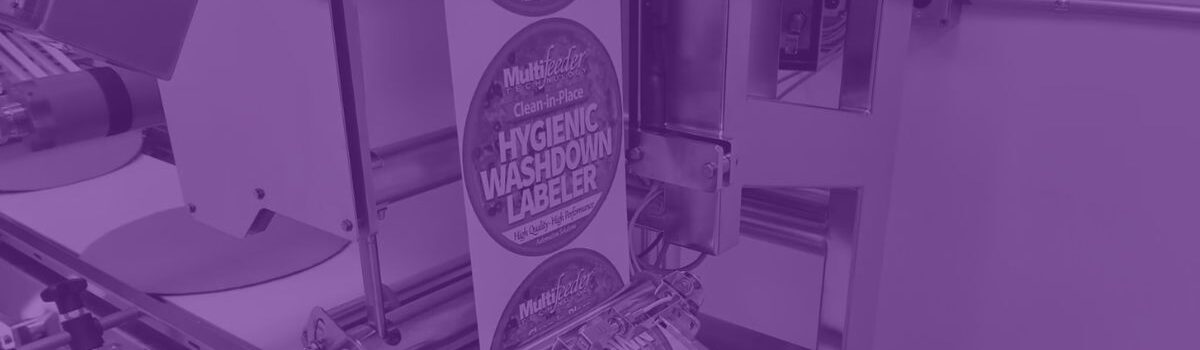
Friction feeders are essential for adding inserts, coupons, cards, labels, or specialty materials into a VFFS workflow. In food, pharmaceutical, and medical environments, hygienic engineering is non-negotiable–and that’s where our Hygienic Washdown Series stands out. These feeders meet IP67 or higher and NEMA4X standards and are built with:- Type 304 stainless steel
- 1200-watt brushless servo motor
- An open, self-draining design
- FDA-compliant materials with no hollow areas
2. Hygienic Labeling Systems
A VFFS line is only as accurate as its labeling and identification. For food, pharma, and medical packaging, hygienic labelers allow you to maintain compliance without downtime. MFT’s hygienic label machine features:- Open, self-draining construction
- Moisture and corrosion resistance
- Minimal disassembly for quick sanitation
- High-precision servo control for consistent placement
3. Robotic Pick-and-Place and Loading
Robotics are increasingly important in VFFS operations, especially for:- Loading trays or containers
- Transferring flexible or semi-rigid packs
- Sorting, stacking, or orienting products
- Supporting sanitary or clean-room workflows
4. Tray Forming for Container-Based VFFS Applications
While many teams think of VFFS exclusively for bags and pouches, a growing number of operations are integrating tray forming into their packaging lineup. The MFT Tray Former 500 supports this by forming consistent trays at high speed with:- Toolless die and ram changeovers
- Drawer-style access for easy maintenance
- A compact footprint for tight floors
- Simple operator controls
- Servo-driven precision and welded steel stability
5. Conveying and Material Handling
Reliable product flow is critical for VFFS performance. MFT conveyors, including washdown-ready options, help you move materials safely and consistently through forming, filling, sealing, labeling, and packing stages. This includes:- Hygienic conveyors for food and pharma
- Product transport between VFFS and downstream modules
- Support for automated inspection and rejection stations
- Space-conscious configurations for tight production areas