
Keeping track of inventory is one of the top priorities of internal operations for any business. A common way stores and companies track inventory is with barcodes which can be scanned to identify the product and its price. With barcode labels, products can be tracked from production to the point of sale, or even to contact a customer if there is a major recall on the product. There are two major types of barcodes used in the world.
Applications
Robotics in the Food Packaging Industry

The fast-paced food packaging industry works hard to keep up with the growing demands of consumers and recently has been trying to overcome the recent global events and concerns. The COVID-19 pandemic has increased public interest in food safety with many consumers demanding transparency and pushing for more regulations and requirements for food packaging. This public outcry has incentivized companies to eliminate even more human contact from their food packaging production lines. To meet the growing food safety and output demands of consumers, the food packaging industry is once again turning towards more automation. Let’s explore some of the applications and trends in the food packaging industry.
MFT Automation is a proud Diamond Partner with Mitsubishi Electric Automation. We provide a robotic, end-of-arm tooling option for a wide variety of packaging solutions.
Food Packaging Trends of 2022

The pandemic, resource and labor shortages, and more have noticeably altered the food packaging industry this past year. With some of the new trends being years in the making and others skyrocketing to the top with the recent circumstances, here are some of the top food packaging trends for 2022.
How to Automate Your Pouch Packaging Process

In many industries, heat-sealed pouches have become an efficient and cost-effective way to send product samples, and sometimes even products themselves to customers. Heat-sealed packets are highly versatile as they can be made with many different materials and come in many different sizes. Because of their versatility, they are used in many industries for many different kinds of products. And a new demand for custom samples and products has risen in consumers that make re-sealable and disposable pouches as a good way to fulfill lot size one orders for small items. The small and portable pouches are also perfect for the current grab n’ go culture. Anything from snacks to beauty creams to medicine, the pouches can hold a little bit of everything and fit easily inside bags. Looking to start using heat-sealed sample packets or looking to automate your pouch packaging process? From verifying barcodes to labeling pouches, there are many opportunities for automation. Here’s our guide on automating your pouch packaging process.
Where to Use Hygienic vs Washdown for Better Food Safety

In the food and beverage industry, food safety is a top priority. Keeping a sanitary environment at all stages of the food packaging process is vital for the safety of customers and the bottom line of the business. A joint study by the Food Marketing Institute and Grocery Manufacturers Association found that on average food recalls cost food companies $10 million in direct costs, this number doesn’t even include the damage to the brand’s reputation and the loss in sales while the company works to regain public trust. Investing in food safety as a business could save millions of dollars in legal damages in the long run.
Labeling on the Production Line: 5 Successful Ways to Print

When identifying which print and label options to use on your production line, there are a few factors you should keep in mind before making your decision. The first is your business model; you’ll want to be sure the printer and label application you choose supports your company’s processes and offers an opportunity for profit. You’ll also want to take into consideration the type of product or products the label will be printed on. The needs of your product(s) should directly influence which print/labeling method is right for you.
In this blog, we dive into the top five print and label methods to consider adding to your production line. Integrating equipment into your automation process that supports these efficient labeling and printing techniques is an excellent way to increase efficiency, output, and quality on your production line.
What you Need to Know about Tax Stamp Application

In order to understand tax stamps and the process for ensuring secure and safe tax stamp application, there are a few components you must first understand. In this blog we’ll cover what a tax stamp is and what makes it different from other consumer stamps. We’ll also share common industries who may use tax stamps and identify automation equipment that could increase your packaging efficiencies.
3 Techniques for Successful Automatic Label Application
If you’re looking to learn more about proven labeling techniques for automatic labeling and what’s needed for your label applicators, this blog is a great place to start. While there are many techniques in the industry, wipe-on labeling, tamp label applicators, and blow-on labels are three techniques we recommend for successful automatic labeling. Let’s dive into each technique with a bit more detail.
1. Wipe-on Label Applicator
Sometimes referred to as “merge” labeling; wipe-on labeling is where a label is dispensed in the same direction of flow as a product when a label is being applied. This is an automatic labeling technique that is widely used in the industry but requires precise set-up for optimal production speeds and quality output. It is also used for products with irregular shapes and surfaces that are not flat (source).
Wipe-on label applicators typically require the base product to be moving and consistently presented to the labeler. While the product moves towards the labeler, a free rotating roller or brush is used to aid the transfer of the label onto the moving product. From there an encoder can be used to track the speed of the product the label will be applied to so the labeler can apply accurately if the product speed might vary.
For this technique to be successful, your automatic labeler should have either a single axis or multiple axis motor. A single motor will assist with unwind, rewind, and drive; however, it will likely require clutching mechanisms for the unwind and rewind functionality. Whereas a multiple axis motor separately powers the unwind, rewind, and drive.
High-Speed Applications
For wipe-on labeling applications requiring higher speeds, a vacuum box or powered unwind may be implemented. (See the third technique to learn more about vacuum/blow boxes and blow-on labeling.) To meet these high-speed and tight accuracy requirements, a second stage may be added to the labeler such as:
Vacuum belt with motor drive: this option allows the label to be dispensed with the adhesive open (non-adhesive side facing the vacuum belt). The vacuum belt can then adjust position or speed to accurately apply the label such as using Multifeeder’s Accutipping controls.
Driven rotary vacuum wheel: this can transfer the label from the labeler to the product in a second stage for added speed or accuracy, similarly using servo controls such as Multifeeder’s Accutipping controls.
2. Tamp Label Applicator
A tamp applicator is a contactless technique for applying smaller labels on products. It is most commonly used on print and apply labelers; however, this technique can also be used on wipe-on label applicators for 3D products or hard-to-reach label placements (i.e. recessed areas). MFT 150pa Print and Apply Automatic Label Applicator
Tamp labelers place the label onto an air cylinder tamp pad or vacuum tamp pad before placing the label onto the product. As the product moves down the conveyor, a pressure sensor (such as Multifeeder design) can be used to indicate if the tamp pad comes into contact with the product. This is especially valuable for variable height products or more intricate products. Such products may also benefit from a complex tamp pad that can place a corner label on more than one surface.
To support a complex tamp pad, a second air cylinder or a hinge (spring-loaded or gas shock) may be required for the second side. A pneumatic style smart tamp or heavy-duty smart tamp could also be used to prevent any tweaking or sensitivity to dirt; learn more about the smart tamp we use in the MFT 150pa Print and Apply Automatic Label Applicator. Additionally, a tamp pad may feature vacuum to hold the label while an airblast is used to release the label onto the product.
3. Blow-on Label Applicator
This sophisticated technique is sometimes used to replace the industry-favorite wipe-on labeling; although it is slightly less precise. Blow-on label applicators use a controlled blast of compressed air to place labels at high application rates. (source 1, source 2). This technique is commonly used for blow labels on coupons and other high-speed applications that require a contactless application (i.e. glass or other fragile products).
A blow box or vacuum box can be used in a similar way when paired with a wipe-on labeler. Oftentimes the vacuum/blow box uses a muffin fan to create a vacuum effect by holding the label to the bottom surface of the transfer device. The wipe-on labeler will index the label onto the bottom surface of the vacuum/blow box, which is then held in place by vacuum. When a product traveling below the box gets to the location the label is to be applied, an air blast releases the label onto the product below. This feature allows the labeler to be placed either in-line or perpendicular to the base product flow depending on label orientation requirements.
Defining which automatic labeling technique is best for your product or application can depend on a series of variables. If you’re interested in learning more about these techniques and other labeling solutions for your product, we’re happy to help. Get in touch with one of our automation and labeling experts by contacting us here or check out some of our labelers here.
Send samples of your labels and base product to us for a complimentary evaluation and test video. Click the button below to get started.
Tags: Labelers, Integrated Systems
5 Things You Need For Successful Cannabis Labeling in 2021

The cannabis industry is a multi-billion dollar industry that has no intention of slowing down. It’s estimated that by 2022, the legal-marijuana industry could impact the economy by $77 billion (source). If you’re in the business of cannabis production, you’ll inherently need to think about the role packaging plays in your process. With packaging comes the need for cannabis labeling and safety protocols. This blog shares a few of the steps, products, and equipment worth trying for cannabis labeling. Above all, we hope one of these steps helps you to have a blooming business in 2021.
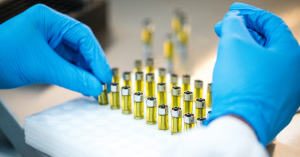 First, you’ll need something to contain your cannabis. For concentrated versions of the plant, cartridges and containers are common options. Versions of these concentrate packaging may include glass concentrate containers, vape cartridges, oil cartridges, AVD cartridges, and Ccell cartridges. However, there are many options for this step.
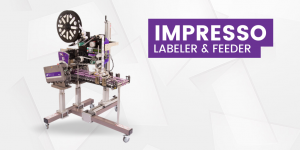 Finding a label machine that can properly place your dispensary labels is key to producing more products, selling more products, and keeping your brand standards in place. When searching for a cannabis label applicator it’s important to know if you can feed your packaging through the labeler with ease and precision. Doing a FAT or Factory Acceptance Test will help you confirm this and ensure the performance is up to par. This also ensures you’re investing in a packaging labeler that actually works for your product.
Oftentimes the label applicator will place the tamper evident labels or stickers on the product for you automatically — saving you time and money. When pairing the labeler with a feeder system, you’ll ensure your cannabis production is fully automated and secure. There are even hygienic labelers and hygienic feeders if you’re looking to keep your space clean and sterile.
Finding a label machine that can properly place your dispensary labels is key to producing more products, selling more products, and keeping your brand standards in place. When searching for a cannabis label applicator it’s important to know if you can feed your packaging through the labeler with ease and precision. Doing a FAT or Factory Acceptance Test will help you confirm this and ensure the performance is up to par. This also ensures you’re investing in a packaging labeler that actually works for your product.
Oftentimes the label applicator will place the tamper evident labels or stickers on the product for you automatically — saving you time and money. When pairing the labeler with a feeder system, you’ll ensure your cannabis production is fully automated and secure. There are even hygienic labelers and hygienic feeders if you’re looking to keep your space clean and sterile.

1. Identify a Concentrate Container
First, you’ll need something to contain your cannabis. For concentrated versions of the plant, cartridges and containers are common options. Versions of these concentrate packaging may include glass concentrate containers, vape cartridges, oil cartridges, AVD cartridges, and Ccell cartridges. However, there are many options for this step.
2. Choose a Packaging Method
Secondly, you’ll want a way to transport and seal the container. To do this, you’ll need to figure out a plan for your packaging. A few commonly used products for packaging include flattened cartons, product free pouches (like a mylar bag), and round containers (similar to a pill bottle), or cartridge blister packaging.3. Invest in Tamper Evident Labels or Stickers
Thirdly, you’ll want to seal your concentrate containers and packaging properly. You can do this by applying a tamper evidence dispensary label or a paper sticker label to the product and/or package. These small labels help protect the integrity of your product. By utilizing tamper evident labels or stickers, you’ll ensure your customers, product, and company are safe from anything harmful.4. Select a Packaging Labeler
Finding a label machine that can properly place your dispensary labels is key to producing more products, selling more products, and keeping your brand standards in place. When searching for a cannabis label applicator it’s important to know if you can feed your packaging through the labeler with ease and precision. Doing a FAT or Factory Acceptance Test will help you confirm this and ensure the performance is up to par. This also ensures you’re investing in a packaging labeler that actually works for your product.
Oftentimes the label applicator will place the tamper evident labels or stickers on the product for you automatically — saving you time and money. When pairing the labeler with a feeder system, you’ll ensure your cannabis production is fully automated and secure. There are even hygienic labelers and hygienic feeders if you’re looking to keep your space clean and sterile.
5. Know your State’s Cannabis Labeling Laws
Finally, if you haven’t already educated yourself on the labeling laws in your state now is the time. Below are a few labeling laws for states that have legalized cannabis — more cannabis state laws can be found here (Note: Always refer to your state’s government website for updated cannabis laws).
-
- Alaska Cannabis Labeling Laws
- California Cannabis Labeling Laws
- Colorado Cannabis Labeling Laws
- Illinois Cannabis Labeling Laws
- Michigan Cannabis Labeling Laws
- Maine Cannabis Labeling Laws
- Massachusetts Cannabis Labeling Laws
- Nevada Cannabis Labeling Laws
- Oregon Cannabis Labeling Laws
- Vermont Cannabis Labeling Laws
- Washington Cannabis Labeling Laws
How to Automate UDI barcodes for Pharmaceutical Packaging
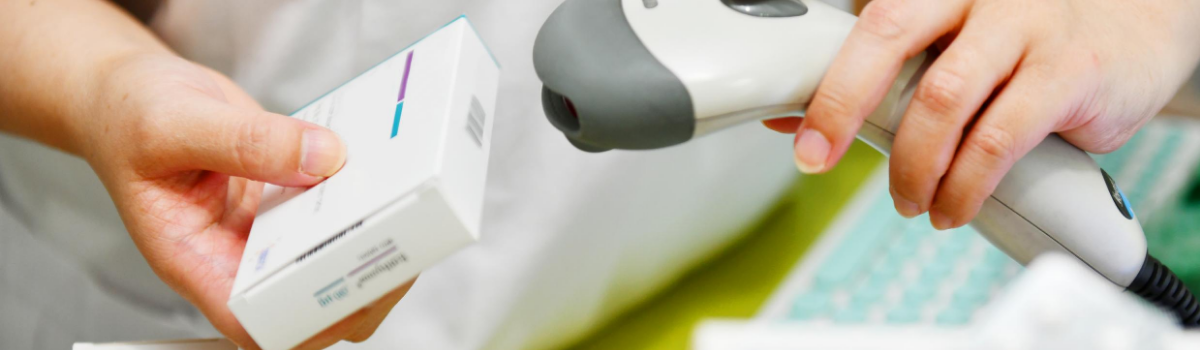
Automation has the ability to quickly introduce and expand life-saving products into society. However, some companies are faced with strict regulations while producing these products safely, efficiently, and accurately. One way pharmaceutical packaging companies combat this feat is by utilizing automation to apply UDI barcodes or Unique Device Identification codes on products.
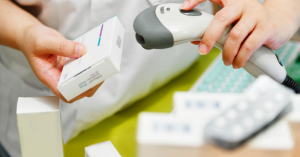 What are the UDI labeling requirements?
The UDI labeling requirements align with the Unique Device Identification System, which was signed into law in 2007. The system ensures unique identifier or codes are assigned to medical devices manufactured across the globe (source). Pharmaceutical labeling requirements mandated by the FDA, state the following:
“The Unique Device Identification System final rule (UDI Rule) requires device labelers (typically, the manufacturer) to:
What are the UDI labeling requirements?
The UDI labeling requirements align with the Unique Device Identification System, which was signed into law in 2007. The system ensures unique identifier or codes are assigned to medical devices manufactured across the globe (source). Pharmaceutical labeling requirements mandated by the FDA, state the following:
“The Unique Device Identification System final rule (UDI Rule) requires device labelers (typically, the manufacturer) to:
What are the UDI labeling requirements?
The UDI labeling requirements align with the Unique Device Identification System, which was signed into law in 2007. The system ensures unique identifier or codes are assigned to medical devices manufactured across the globe (source). Pharmaceutical labeling requirements mandated by the FDA, state the following:
“The Unique Device Identification System final rule (UDI Rule) requires device labelers (typically, the manufacturer) to:
-
- Include a unique device identifier (UDI) on device labels and packages, except where the rule provides for an exception or alternative.
- If a device is intended for more than one use and intended to be reprocessed before each use, the device labeler must also mark the UDI directly on the device.
- Submit device information to the Global Unique Device Identification Database (GUDID).”
- Include a unique device identifier (UDI) on device labels and packages, except where the rule provides for an exception or alternative.